How to Read Auto Industry Research Without Getting Caught in the Hype
Separating signal from noise in EV adoption claims, battery breakthroughs, and market forecasts.

The auto industry churns out research reports like no other sector. Every quarter brings fresh claims about EV adoption curves, battery range records, and autonomous vehicle timelines that sound revolutionary in a press release.
Most of it exaggerates. Some of it misleads. Learning to read between the lines isn't cynicism—it's competency.
The difference between a credible forecast and hype often boils down to how closely you examine the source, the methodology, and what the numbers actually say versus what the headline promises.
Follow the Money Behind the Study
Who funded the research? This is question one. A battery supplier commissioning a study on "why lithium-ion will dominate through 2035" has a stake in that conclusion.
That doesn't make the research worthless—but it colors the lens. Look for disclosure statements, sponsor lists, and institutional affiliations in the methodology section.
Independent research from universities or nonprofits like the Transportation Research Board tends to publish findings that challenge industry assumptions as readily as they confirm them.

Check the Sample Size and Scope
A survey of 500 EV owners in California doesn't represent the entire U.S. market. Yet headlines often treat regional data as national truth.
Look for sample size, geographic spread, and whether responses came from a representative population or a self-selected one. A study of early adopters will naturally skew optimistic about new technology.
Forecasts based on surveys are particularly vulnerable to this bias. What consumers say they'll buy in a hypothetical scenario rarely matches what they actually purchase.
Red Flags in Auto Research
Watch for Conflation of Hype with Evidence
A lab announcing a "breakthrough" in solid-state battery chemistry is real news. But translating lab success to mass production at cost parity takes years, not months.
Industry coverage often skips that gap. A startup claiming a 1,000-mile battery gets headlines; the quiet reality that prototypes don't yet exist at scale rarely makes the same press run.
When reading research on emerging tech, ask: Is this a scientific achievement or a commercial milestone? One proves feasibility; the other proves viability. They're not the same.
Compare multiple studies on the same topic from different sources. Consensus across independent researchers is stronger than any single report, however prestigious.
Separate Descriptive from Prescriptive Claims
"EV sales rose 18% last quarter" is a fact you can verify. "EV sales will hit 60% of the market by 2030" is a prediction based on assumptions.
Both appear in research reports, but they carry different weight. The first is backward-looking and usually reliable. The second depends on policy changes, consumer behavior shifts, economic conditions, and competitor moves—most of which are unknowable.
Strong research will clearly label which is which. Weak research blurs the line, presenting forecasts with the confidence of historical data.
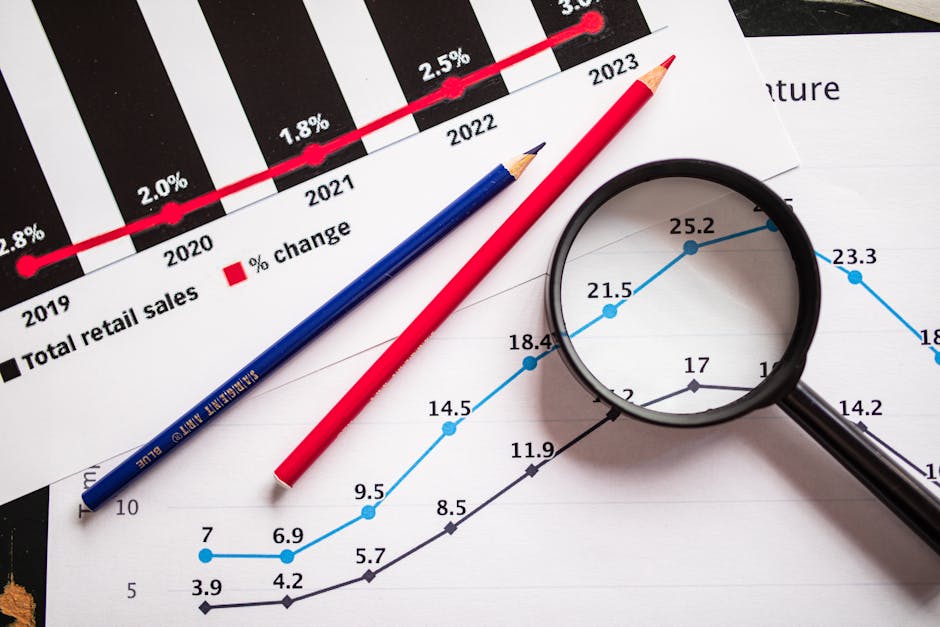
Look for Scenario Analysis, Not Single Predictions
The best auto industry research doesn't pretend to know the future. It maps multiple plausible futures: best-case, base-case, and downside scenarios.
When a study provides only one forecast, it's either oversimplified or the author is overconfident. Real uncertainty deserves real acknowledgment.
Research from organizations like the International Energy Agency often uses scenario modeling precisely because automotive adoption depends on too many variables to pin down a single truth.
The Bottom Line
Most auto industry research is honest but optimistic. Sponsors believe in the direction they're funding. Researchers want to publish findings that matter. That's not corruption—it's human nature.
Your job is to read with eyes open. Check the source, verify the sample, spot the buried assumptions, and compare forecasts across independent outlets. The signal emerges when you look beyond any single headline.
2026 brings more research than ever. The publications that survive won't be the ones with the boldest claims—they'll be the ones whose predictions, months later, actually came true.